They Don’t Need a Yacht
Brennan J. Kent / March 19, 2026
When someone is drowning, they don’t need a yacht. They just need something that floats. A rope. A raft. Even a beat-up buoy tossed their direction. Because in that moment, they’re not thinking about comfort or presentation—they’re just trying to breathe.
And I think we forget that sometimes.
When we see someone struggling—at work, at home, in life—we hesitate. We wonder if we have the right words, or the right response, or something meaningful enough to actually help. And when we’re not sure, it can lead to inaction. We hold back because we don’t feel equipped to show up the “right” way.
But people in hard moments aren’t looking for perfect. They’re looking for present.
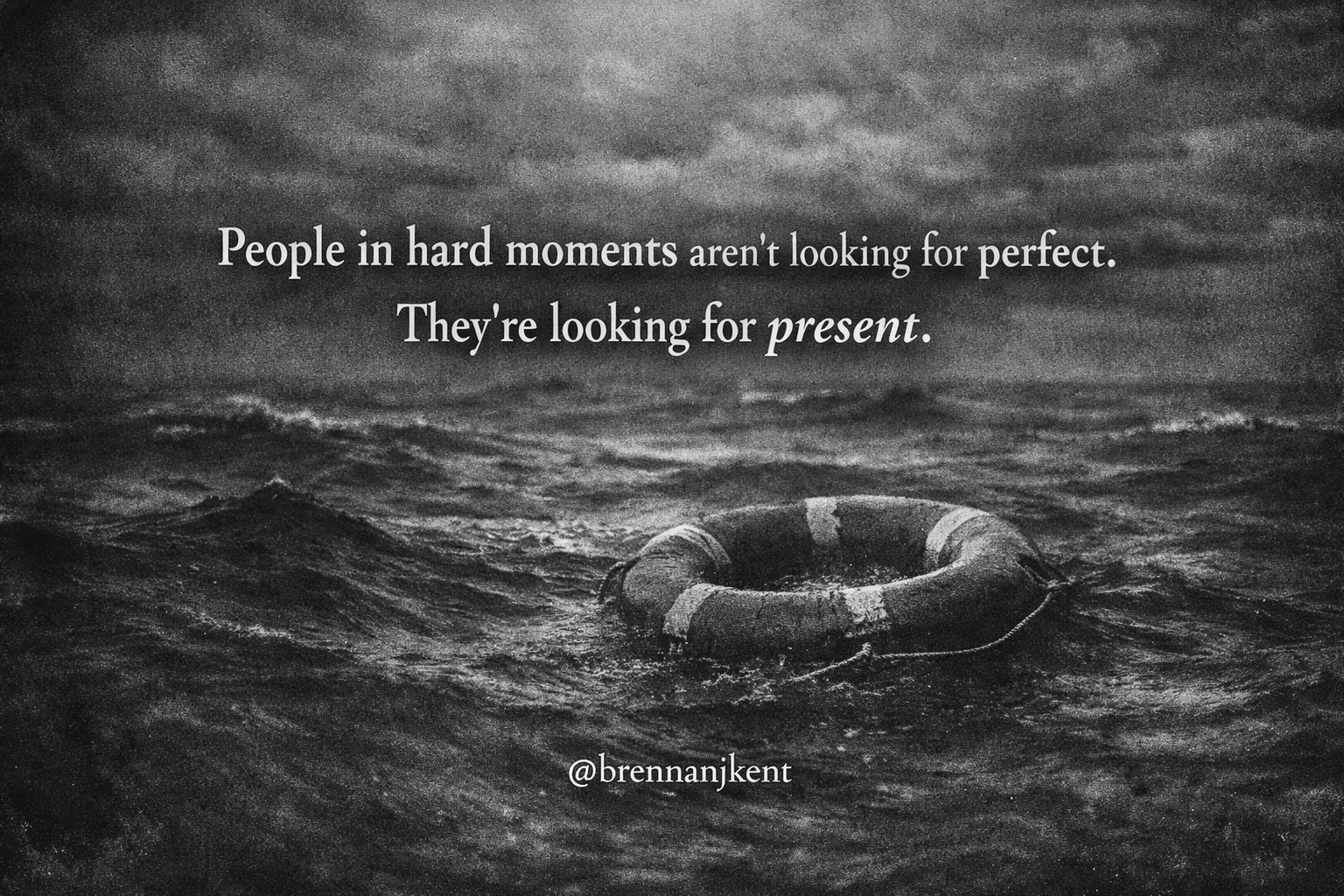
No one in the water is asking if a yacht is coming to rescue them. They’re just hoping something—anything—reaches them in time. And yet, we convince ourselves that if we can’t offer something polished or profound, maybe we shouldn’t offer anything at all.
That’s just not true.
Most of the time, people don’t need to be fixed. They don’t need a perfectly worded message or a well thought-out solution. They need someone to help them catch their breath. Someone to sit with them long enough to gather their bearings. Someone willing to step into the mess and remind them they’re not alone.
I think about the times people have shown up for me. They didn’t come with a keynote speech or a golden answer. They came with presence. They sat with me. They walked into the fire with me. And that mattered more than anything they could have said.
One moment that sticks with me came during a really difficult season in my life. My wife and I were navigating a pregnancy loss, and there was a quiet distance growing between us. One night, I walked into the bathroom late, and my toothbrush was sitting there with toothpaste already on it.
That was it.
No speech. No big conversation. Just a small, simple act.
Maybe it was a reminder about my breath. But what it really felt like was an olive branch. A quiet way of saying, “I see you. I still like you. I’m with you.”
It sounds small, maybe even a little insignificant. But in that moment, it meant everything.
Because when you’re struggling, you’re not looking for a yacht. You’re just looking for something that helps you breathe again.
So if you’re ever wondering whether to reach out—do it. Even if your words aren’t perfect. Even if you don’t have a solution. Even if all you have is something small to offer.
Throw the buoy.
Send the text. Sit down next to them. Do the small thing.
You don’t need to be a poet to step in when someone is taking on water. You just need to be willing to show up.
Because more often than not, that’s exactly what they need.
Get Yourself Right
It all begins with an idea.
There has long been the phrase, “get yourself right.”
Lately, I’ve realized the benefit of not directing that phrase toward others. When aimed outward, it can come across as demanding, belittling, or surface-level—especially when we don’t know the full backstory of what someone is carrying.
Instead, I’ve come to see getting myself right as a personal mission—one that allows me to better serve the people around me. More and more, I’m convinced that one of the main purposes of life may be this constant journey of self-improvement, so that we can make a stronger, more positive, more vibrant impact on those within—and outside—our immediate circle.
Self-improvement can sound like a trendy buzzword, but at its core, I believe it simply means investing time and energy into yourself so you can show up as your best self. That might include miles logged on the treadmill, being mindful of what you’re eating, or putting yourself in situations and routines that genuinely make you feel happier and healthier.
Every once in a while, it’s worth pausing and doing a quick inventory:
What in my life is making me feel fulfilled?
What in my life isn’t doing much for me at all?
One way to turn that inventory into action is to turn your intentionality up to 100.
For example: if you find yourself endlessly scrolling on your phone—especially when your kids and/or spouse are sitting in the same room—try mindfully getting up, putting your phone out of sight, and picking up a long-lost family game of Sorry or Monopoly (let’s start small and go with Sorry).
Then ask yourself: Was that a more enjoyable evening?
I’m willing to guess the answer is yes.
Do it again the next night. Then again the next. And before you know it, your kids may start asking, “Can we play again tonight?” A week later, you’re suddenly a family that plays games together more nights than not.
So often we struggle with identity—even in the small, private stages like our own home. We resist change, even when we know something isn’t working for us.
The same can be true with exercise.
We tell ourselves, “I’ve never been a runner,” or “I could never do that.” But then you step onto the treadmill (or outside), put in a couple of sweaty sessions, and a week or two later… you realize you’re becoming the very thing you once said you weren’t.
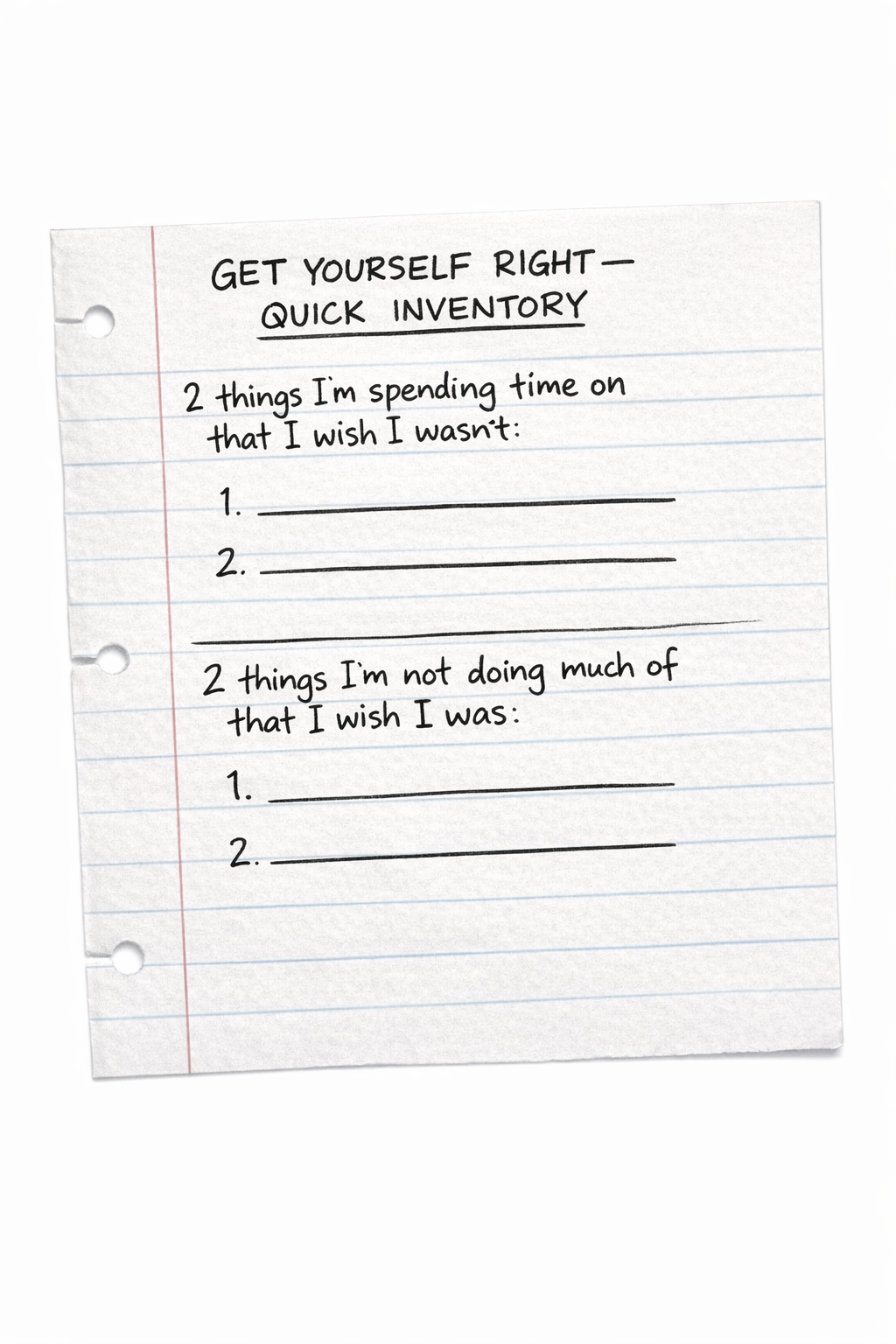
Back to the inventory: I challenge you to physically grab a piece of paper and write down:
Two things you’re spending time on that you wish you weren’t.
Two things you’re not doing much of that you wish you were.
These don’t have to be earth-shattering. They might be things like:
“I’m spending too much time on my phone.”
→ So I’m putting it out of sight from 5:00–7:30.“I need to drink more water.”
→ So I’m making it part of my daily routine.“I’m not being as affectionate as I should be.”
→ So I’m starting with a hug each day—and an ‘I love you’ before bed.“We don’t sit down for meals as a family.”
→ So we’ll commit to at least one sit-down meal per week.
These are small actions—but show me a marriage that doesn’t improve when you intentionally greet your spouse with a hug at the end of the day. Show me a home environment that doesn’t improve when the family sits down for a meal or spends intentional time together.
Here’s the best part: the people around you notice these changes fast. That awareness builds momentum in a hurry.
Being a better spouse, parent, family member, or friend isn’t complicated.
It takes a little planning, a little time, and a commitment to being intentional—one small change at a time.
All is well,
Brennan
Bruises, Band-Aids, and Being in Their Corner
Brennan J. Kent / March 5, 2026
The other day my son came home from school and told me he had been hurt. Not just hurt — according to him, it was real bad. The way he said it had the seriousness of someone who had clearly endured something significant. He handed me the Band-Aid like evidence and waited for my reaction.
I peeled it back carefully.
Right in the center of the white bandage was the faintest little dot of red. Barely anything at all — like the sharpened point of a crayon had just touched the surface and disappeared again.
I looked up at him and tried not to smile.
Because to him, in that moment, it was real — although he is a bit of a joker.
Through this conversation I was reminded of something I’ve learned over the years — both as a leader and as a parent.
There’s a difference between a bruise and real harm.
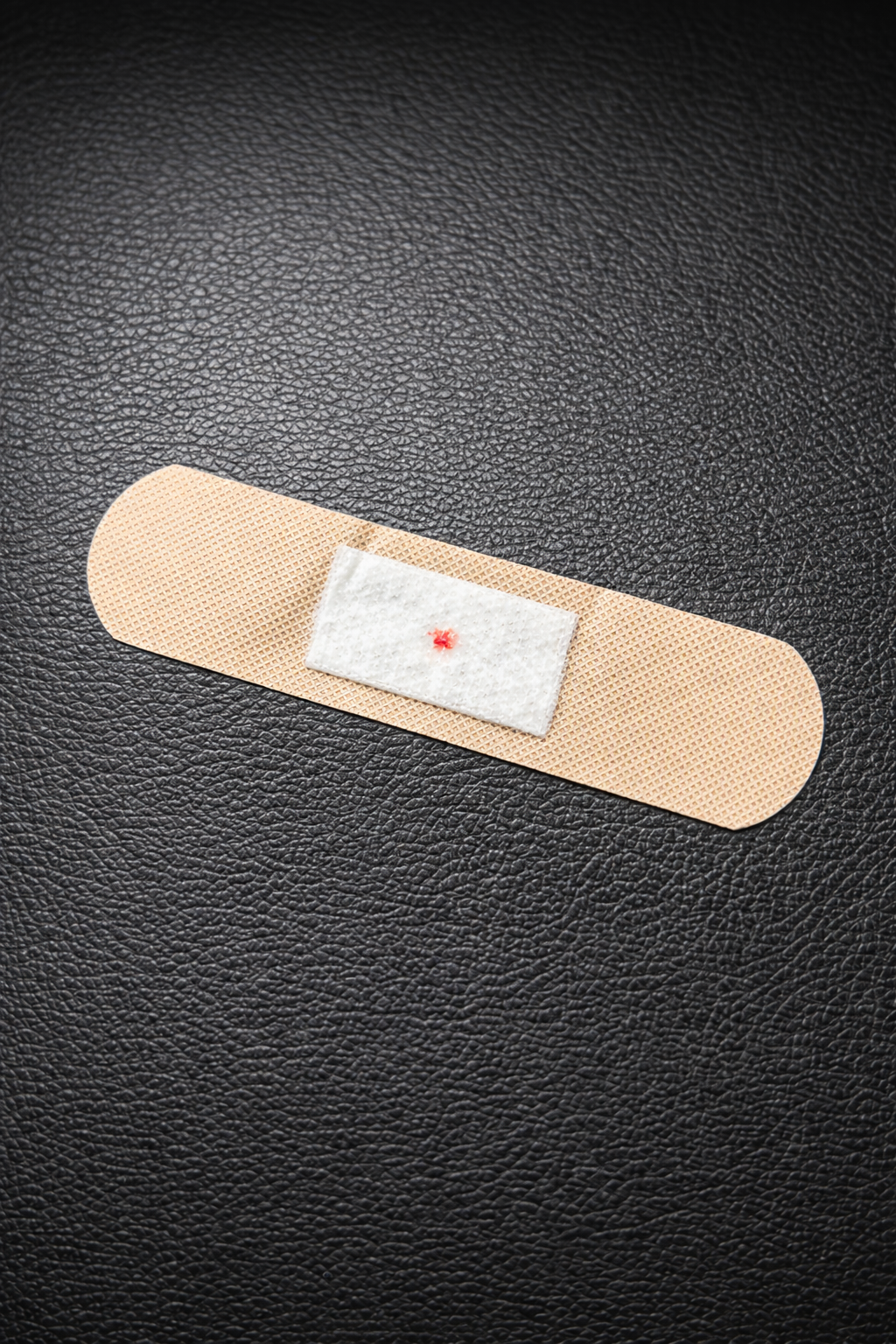
The band-aid in-question
Early in my career I worked for a superintendent who had a simple mantra for his principals. It wasn’t something he announced in speeches or wrote into leadership handbooks. It was just something he said plainly, the way people do when they mean it.
“I can’t keep you from getting bruised. But I’m 10,000% in your corner.”
He wasn’t promising smooth roads or easy decisions. He wasn’t offering to intercept every complaint or shield us from hard conversations. Leadership doesn’t work that way. But what he was promising was something far more valuable — presence.
You might get bruised. Leadership has a way of doing that. But you wouldn’t be standing there alone.
And that changed everything.
There were tough conversations. There was community pushback. And if I’m being honest, there were moments when mistakes I made created my own messes. But through all of it, I never felt like I was out there by myself. He wasn’t in the business of bubble-wrapping leaders. He was in the business of standing in their corner.
And that made the bruises easier to carry.
Over time I’ve noticed something interesting. The more arenas I step into — school leadership, community work, coaching, parenting — the more I realize the rules don’t really change.
The setting might shift. The stakes might look different. But the principles stay the same.
Growth requires friction. Responsibility requires risk. Leadership requires exposure.
Our job isn’t to eliminate every bruise. Our job is to make sure people know they’re not standing alone when they get one.
Now, there is always a line. There has to be.
Psychological safety matters. Integrity matters. Real harm is never acceptable.
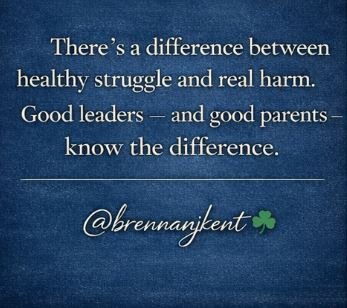
But there’s a difference between healthy struggle and real harm. And good leaders understand that difference.
Parenting lives in that exact same space.
If you’re anything like me, your instinct is to protect your kids from anything that might hurt them. I adore my kids. I hate seeing them upset or frustrated. When they struggle, every part of you wants to step in and smooth the path.
But sometimes I wonder if that instinct tells us a small lie.
What if those moments of frustration are actually where the magic happens?
Not necessarily in the middle of the struggle — but afterward. In the quieter moments when things settle and reflection takes over.
Those are the moments when a child starts to realize something important.
I handled that… I can’t believe I did that.
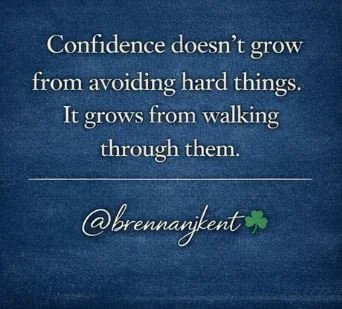
That realization is powerful. Confidence rarely grows from avoiding hard things. It grows from walking through them and realizing you’re still standing on the other side.
Sometimes the most important parenting moment happens after the moment has passed. Sitting beside them and saying something simple:
“I could tell that loss really bothered you earlier. But you worked through it. Remember — we can do hard things.”
Those reflective moments are where resilience begins to take root.
Sometimes that means letting someone take one on the nose.
Sometimes mistakes have consequences. Sometimes the bruise carries the lesson.
And if we’re paying attention, we can almost see growth happening in real time. You can see the maturity forming. You can see the lessons quietly filing themselves away for later — for the day when they hit a dead end, or when life puts a mountain in front of them that needs to be climbed.
Those moments matter.
That’s where resilience gets built.
Not because someone removed every obstacle, but because someone stood in their corner while they figured it out.
And maybe that’s the real work — whether we’re leading a school, raising a child, coaching a team, or simply trying to show up well for the people around us.
We don’t eliminate every bruise.
We make sure people know they’re not alone when they get one.
Because the arena may change.
But the responsibility doesn’t.
And the best leaders — and parents — know the difference between healthy struggle and real harm.